
ResourcesRadiation protection and nuclear facility layout
Change barrier bench 1800 x 450 symbol (DWG block)
Change barrier bench 1800 x 450 is a ready-to-use AutoCAD block named RAD_CHANGE_BARRIER in the Radiation protection and nuclear facility layout, group “Contamination control and waste”. It carries 8 attributes, 1 of them visible, so it works in equipment lists and BlockSync exports.
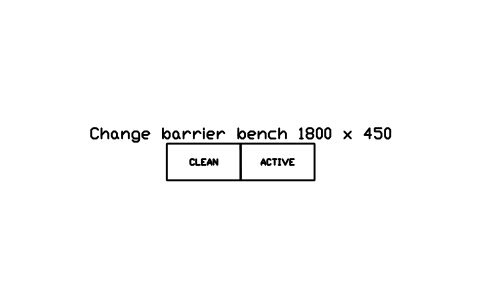
Block details
| Block name | RAD_CHANGE_BARRIER |
|---|---|
| Library | Radiation protection and nuclear facility layout |
| Group | Contamination control and waste |
| Attributes | 8 attributes, 1 visible |
Attributes
Visible on the drawing: DESIGNATION.
Hidden, they carry the data for schedules: SIZE, TYPE, MANUFACTURER, MODEL, QTY, REMARKS, DESC.
Export the attributes of every copy in a drawing to Excel with BlockSync, check them and write the corrections back in one run.
How to use it
- Download the ZIP and unzip it. It holds one DWG with the block RAD_CHANGE_BARRIER.
- Open the DWG and copy the block into your drawing, or insert it from the DWG with INSERT.
- Double-click a copy to fill in the tag and the other attributes.
Used in sample drawings
The Change barrier bench 1800 x 450 symbol is placed in these finished sample drawings, so you can see how it is used on a real sheet:
The symbol is our own drawing after the common form of Radiation protection and nuclear facility layout, not a certified copy. The library page explains how the symbols relate to the standard.
Names in other languages
The same symbol under its name in the other site languages.
- English
- Change barrier bench 1800 x 450
- Simplified Chinese
- 更衣隔离长凳 1800 x 450
- Traditional Chinese
- 更衣隔離長凳 1800 x 450
- Japanese
- 更衣バリアベンチ 1800 x 450
- Korean
- 탈의 구분 벤치 1800 x 450
- German
- Umkleidebank mit Schwarz-Weiß-Trennung 1800 x 450
- French
- Banc de déshabillage à barrière 1800 x 450
- Italian
- Panca di separazione spogliatoio 1800 x 450
- Spanish
- Banco de cambio con barrera 1800 x 450
More symbols in the group “Contamination control and waste”
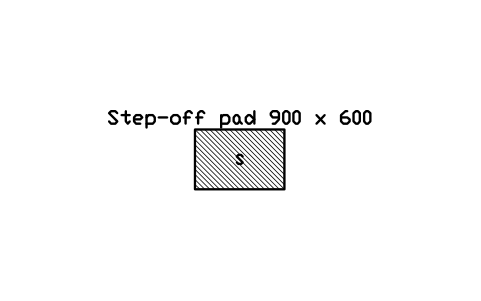 Step-off pad 900 x 600
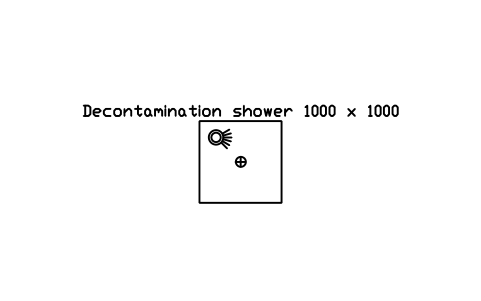 Decontamination shower 1000 x 1000
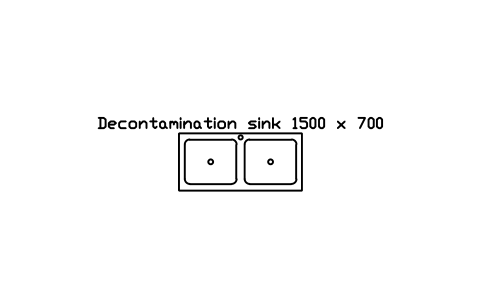 Decontamination sink 1500 x 700
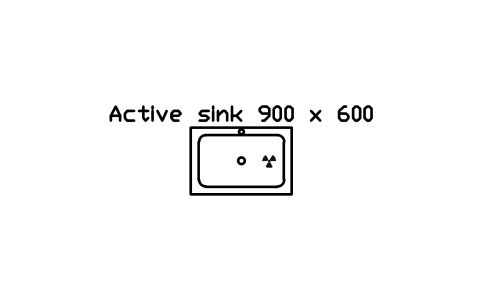 Active sink 900 x 600
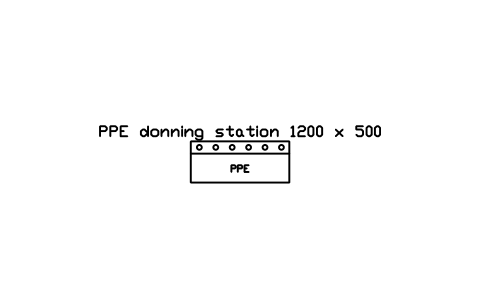 PPE donning station 1200 x 500
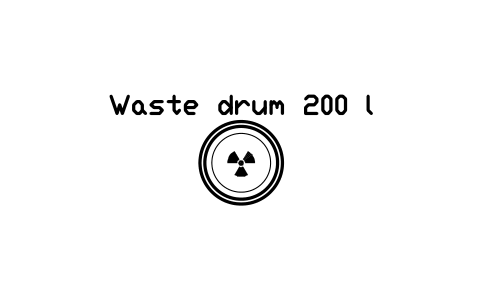 Waste drum 200 l
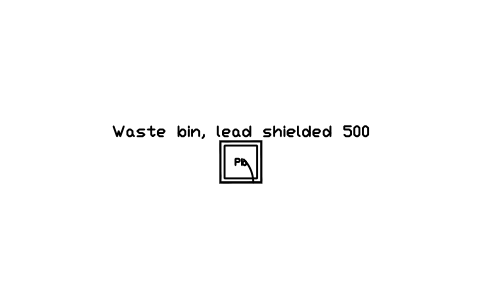 Waste bin, lead shielded 500
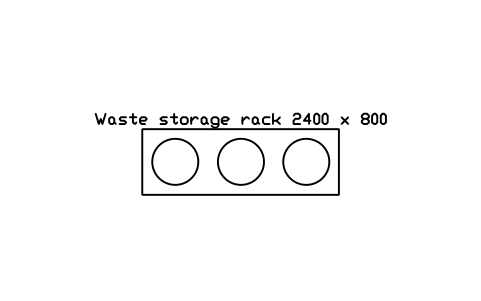 Waste storage rack 2400 x 800
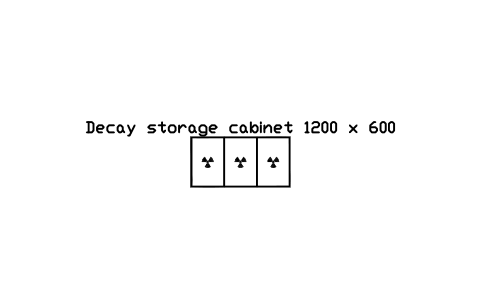 Decay storage cabinet 1200 x 600
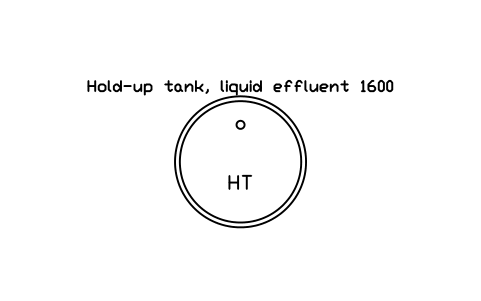 Hold-up tank, liquid effluent 1600
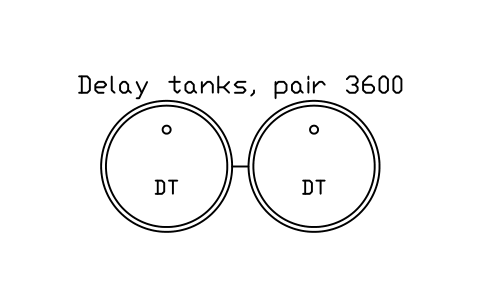 Delay tanks, pair 3600
 Active floor sump 600